Friday, February 17, 2012

The Measure That Matters

Is there any topic more discussed in ITSM circles than measurement? Between SLAs, response times, MTTR, average hold time, abandon rate, etc., we are absolutely bombarded with measurement "best practices." I have nothing against these measures, it's just that they don't matter.

Maybe that was a little flippant, since many of these measurements can help guide us toward better service delivery and customer service. My concern is that they don't help us actually determine whether we are doing better service delivery or customer service. Because measures like performance against SLA are relatively easy to measure, we often make the mistake of assuming a higher rate of SLA adherence means better customer service. SLA adherence has no direct correlation to customer service outcomes. It might help us achieve better customer service, and it might not. If you disagree, think of the last time you diffused a tense customer situation with SLA adherence metrics, or your amazingly low MTTR.

I'll wait. Take your time.

That's what I thought. Never. Na.Da.

The only measure that matters is the one that measures the gap between your customer's expectation, and their perception of the service they received. Yes, I talking (again) about my favorite model, the modifed SERVQUAL model.


You can read my discussion of the model here.

In my version of the model, we're talking about Gap 7 - the gap between the customer's expectation and the actual service delivered. For service providers, it is the only thing that matters. SLAs, service catalogs, continual/continuous service improvement, MTTR, abandon rates, availability, change success rates, et al, mean absolutely nothing if they don't impact the customer's perception of the service they received. This is what has earned IT a bad reputation the past several years. We're still focused on five-nines and "on-time on-budget", when our customers simply want it to do what they expect it to do, when they want it. I cringe whenever I hear someone start talking about project success rates, and then hear them talk about staying on budget. OK, great. But did the project outcomes meet or exceed original expectations?

The old inward-focused measures are still very important. They can help us determine which elements of IT's service delivery help or hurt us meet the customer's expectations. I just want those measures to stay inside the IT department.

Going back to Gap 7, how can we measure that gap? It's not necessarily a nice tidy number we can measure with precision. To help in this endeavor, I suggest Douglas Hubbard's book How To Measure Anything, and the accompanying website. It's a great book for data nerds like me. One enduring concept for me is the idea that measurement is not about absolute certainty. The purpose of measurement is simply to reduce uncertainty. How much certainty do we need in order to make decisions based on the measurement of Gap 7? Do we need more staff? Should we revamp of prioritization standards? Should we re-focus our communications plan? These are not decisions requiring highly precise measures. We won't get much value from distinguishing between a customer satisfaction score of 3.2173 and 3.2201, on a 4-point scale; but that distinction would certainly matter to a machinist when measuring centimeters of variance in a given part.

The point is that it doesn't  really matter exactly what you measure, or whether you can measure it with a high degree of certainty. Find something that makes a reasonable stand-in for Gap 7, and start measuring. It's far more important to be consistent in how you measure, than it is to be precise in your measurement. For example, I've started measuring Gap 7 in support services by sending a closed ticket survey, asking the user to rate the level of quality and timeliness they experienced. It's not perfect, but it's something all staff can point to when determining relative variance between customer expectations and service delivery perceptions. A higher number on the 4-point scale means a smaller variance in Gap 7. Now we can start measuring whether an increase in first call resolution causes an increase in survey scores. Measuring first call resolution, with no context as to the impact on Gap 7, gets us nowhere.

What do you use to measure the gap between customer expectations and their perception of the service received? I'd love to hear your ideas in the comments. If you're not currently measuring that gap, what could you use to start measuring? What works (and doesn't work) in your environment?

Friday, December 30, 2011

Should the Help Desk be the Place to Start IT Requests? Part 2

In Part 1, I questioned a fundamental assumption around IT services and how they are supported: that the Help Desk should be the place to start all IT requests. I used "request" in the most general form, meaning it could be reporting an incident, all the way to initiating a request for a new service. This assumption is practically a sacred cow in many IT shops. I even confessed to subscribing to this school of thought for a long time myself. The main point is that we've gone far away from the original point of using the Help Desk as SPOC (Single Point of Contact), which was to save money and improve the requester's experience. Am I the only IT manager that purposefully provided sub-par service when users contacted me directly instead of using the Help Desk? Based on my personal experiences as both an internal IT manager and an external service provider, I highly doubt I am alone. I've heard many stories of managers and senior engineers choosing to respond to direct requests for service by artificially delaying the response, and adding at the end something like, "You'll get faster responses if you call the Help Desk first."

It seems innocent enough, doesn't it? I still responded to the user's request, and I let them know they received a delayed response because they went through me instead of the Help Desk. We rationalize that behavior with thoughts like, "They were lucky I was available as quickly as I was this time. What happens next time when I'm away at a conference or something else equally important (Something obviously more important than a user's service request)?" The Help Desk exists to take in these requests. I have a lot of other work to  do.

The rationalizations seem to make a lot of sense, until you come to this other realization:
The requester knows the Help Desk is there, and yet they chose to go to you or someone outside the Help Desk anyway.

To the requester, there is value in using options other than the Help Desk. IT's response for far too long has been to force users to go to the Help Desk, for their own good. At the same time, we devalue the Help Desk staff by making sure they are the lowest paid, least trained, lowest rung on the IT food chain. We assume it's a job anyone in IT could do. And then we're shocked that everyone hates the IT department? Seriously?

We need to change this approach, and we need to do it NOW. Here are some tips for changing how you position your Help Desk:

  1. The Help Desk's purpose should be clearly defined to include professional management of IT requests, open to close and verification, and making the Help Desk the preferred option for initiating requests.

  2. Metrics should be based on whether or not the Help Desk is the preferred method of initiating IT requests.

  3. Accept the fact that some request scenarios may well be best served outside the Help Desk. Do some research and figure out what kinds of requests get initiated outside the Help Desk most frequently. Before you start figuring out how to get those requests to go through the Help Desk, ask yourself a few questions:


    • What would it take to make the Help Desk the preferred option for this type of request?

    • Will that result in a better experience for the requester?

    • Is it worth the cost and time to make the necessary changes?

    • If the answer to the last two questions is anything but an emphatic "Yes", consider leaving things as they are.

  4. IT frameworks and models such as ITIL, ISO/IEC 20000, COBIT, etc. provide excellent guidance once you've established the Help Desk as the go-to request initiation team; but while you're working to make that happen, be very careful where and how you use them in request processes. Some readers will have broader experience, but my experience has been that this is the very place where many ITIL "implementations" fail. Incident Management processes can be a square peg prematurely forced into a round hole. Once the hole is reshaped, those process changes work very well.

  5. The SERVQUAL model, that I wrote about previously, provides an excellent way to guide your research. 

Per the model, the core measurement of service quality is the gap between the customer/consumer/user's expected service, and the service they perceive to have received (My Gap 7, SERVQUAL's Gap 5). How much of the efforts around ITIL, ISO20000, COBIT, etc. are focused on that gap? Aren't most of our efforts around Service Strategy, Design, and Transition? At best, those efforts have an indirect impact on the quality of service provided. I'm not suggesting that we abandon efforts around Strategy, Design, and Transition. Far from it. Rather, I recommend placing those efforts in their proper context -- that of  supporting the goal of reaching and exceeding customer expectations.

So we can safely assume that forcing users to start all requests with the Help Desk does not meet, much less exceed, our users' expectations. As always, measure the gap to validate.

After validating the existence of a gap, and determining that the size of the gap justifies further efforts, we see another common problem. When it comes to the support side of Service Delivery, we frequently focus efforts on Incident Management or Problem Management. But look at the model again. The service delivered is only one of at least six different inputs that affect either side of the service quality gap. Assuming your Incident Management is at least somewhat matured from an ITIL perspective, that means we are likely putting our efforts into the one input we are most likely doing fairly well. The common excuse is that the ITIL-defined processes are the only things we have immediate control over. We're essentially saying, "We do our part in the quality equation just fine, so it must be the users' fault that they go around the Help Desk." This is classic "Inside-out" thinking that, as suggested by Ian Clayton, threatens the survival of ITSM programs. That's not to say that inside-out thinking is always bad; it's just limited in what it can accomplish. Famed quality guru W. Edwards Deming once stated that you can have zero defects AND zero customers.

There are at least 5 other inputs into the expectations - perceptions gap:

  • IT Communications impact users' perceptions of service

  • IT Communications also impact users' expectations of service

  • IT's Service Design and Service Transition efforts impact expectations

  • The user's own experiences and history impact their expectations

  • The user's business unit, with their own goals, strategies, and tactics, impact the user's expectations

ITIL and other frameworks only help us with 2 of the 6 direct inputs into the expectations - perceptions gap. By all means, look at your Incident, Problem, Transition, etc. management processes. Making those better will help close the gap. By showing us the specific inputs to address, the SERVQUAL model can help make managing the rest of the gap more pragmatic.

If your Help Desk is not the place your users want to initiate requests, don't give up. You have the tools to both exceed user expectations and be cost/process effective.

Wednesday, December 21, 2011

IT Is No Longer a Corporate Support Service. Are You Ready?

If you are part of a corporate IT group, chances are you are struggling like I am with the concept that IT is a support service. It used to be taken for granted: our role was to be the implementers and fixers of technology. The implications being that things like budgets were looked at from a pure cost-centered approach. Provide the necessary technology at the lowest cost possible ... more akin to maintenance and facilities roles.

But corporate needs are shifting, often faster than corporate assumptions around the role of IT. Do you find yourself in this situation today? Corporate strategies and the objectives intended to carry out those strategies depend on technologies requiring more creativity and variability than ever before. Take social media as an example. As recently as five years ago, corporate on line presence was defined by a corporate controlled web site and corporate email. Some put in tools for real-time chat for sales and customer service; but the environment was still tightly controlled by the company. IT’s role was that of a relatively static entity to roll-out things. Even “dynamic” content was rolled out as a technology tool. Once programming and design were complete, it was essentially up to business users to make it work. IT was just there to fix it when something broke.

Compare that to online presence today. Social media that companies have little, if any, direct control over have dominated. Within a few years, it will saturate every nook and cranny of our corporate world. Traditional corporate content providers, like marketing, sales, and customer service, are ill prepared to handle the barrage of technological challenges in such an environment. If your company is anything like mine, they are now looking to IT to provide ongoing expertise in managing the corporate online identity. They key here is “ongoing”. The challenges of corporate online identity are constant; not needing an annual or quarterly technology refresh, but often requiring a daily, hourly, or even minute-by-minute refresh.

As old attitudes around the role of IT pervade, it’s easy for an IT department to say, “It’s not my problem. Sounds like a marketing problem to me. We can provide some consulting, but not much else.” But the business expects and NEEDS IT to become hands-on in managing online presence and identity.

Are they wrong? What are we prepared to do about it?

Tuesday, December 20, 2011

Do Users Prefer to Contact the Help Desk? Should They?

I've been thinking a lot lately about utilization of the Help Desk (Service Desk, whatever...), and how many of us in IT management constantly try to funnel all requests through the Help Desk. It was starting to bother me that most of us, myself included, spend an awful lot of effort telling end users not to go straight to other IT staff. I can't tell you how many times I've received a call or email from an end user, asking for help with a problem -- or answers to their questions -- and my response was to direct them to the Help Desk.

I recently realized how hypocritical this response is. A few years ago our Finance group made changes to the way we process corporate credit card transactions. Those of us outside Finance complained loudly to each other about how much harder the new system was for us. I was fond of telling anyone who would listen that I'd never endorse an IT project that made life easier for IT, but harder for everyone else. Ha! I understood service, and Finance obviously did not. It was probably within the same day that I told an end user, for the 80th time, that the Help Desk is the best place to go to start any IT inquiry. I love irony ... expect for when it convicts me.

A few days ago Aale Roos (Recommended Twitter follow) linked me to an article he wrote about the concept of Service Desk Market Share. Read up for a good discussion of some survey work he's done around the issue. His take is based more upon the idea of how many attempts a user makes before getting their problem resolved, and how many places other than the service desk a user goes to get help. My interests lie in the options users have in contacting different IT staff.

If an end user has a problem, question, or request to implement something, they have a myriad of choices of where to go to get help. Frequently, the choice is not the Help Desk. We know that self-help can be a great option. It empowers the user and lowers overall costs (assuming what they do actually helps, and they find the answer quickly). Within IT, however, our current attempts to FORCE use of the Help Desk is no better than Finance forcing an unwieldy reimbursement process on us. This is a simple truth:

If it doesn't improve the requester's experience, we shouldn't do it.


I don't advocate banishment of the help desk. Far from it. The Help Desk / Service Desk model allows for significant cost savings and professional management of business requests. Note that I say "allows for". All too often, the only benefit of the Help Desk model is to allow the staff that handles Level 2 and 3 support to spend more time on higher profile -- and therefor more business visible -- projects. Take a long, hard look at your support processes. Do they focus on improving the requester's experience, or are they really based on ensuring the techies don't get bothered by new requests? We've actually encouraged staff outside the Help Desk to turn away requests. The way to get users to access the Help Desk is for those in the other channels to make themselves look awful, right? Don't be embarrassed, we've all done it.

There. Doesn't it feel good to get that out in the open?

So, is your Help Desk the preferred choice when your customers need help or request something? Or are there alternatives, sanctioned or not, that your customers would rather use? Why?

In the next post, I'll look at some ways to start making the Help Desk the preferred choice, as well as how to determine when they shouldn't be the preferred choice. Please share your thoughts in the comments.

Monday, October 10, 2011

Concerning ITers; Or, Being An ITSM Vendor Is Not For The Faint Of Heart

We're looking at Service Desk toolset vendors. There. I said it. How many of you out there are bold enough to make that statement on a widely read public blog? Or even this blog?

Not many I bet. And why is that exactly? We in IT are generally quiet, hardworking folk who are quite distrusting of those outside the Shire. I mean data center. We like only having 2-3 choices for our vendors, and we prefer when we initiate the dance. Get too serious too fast, and we'll back away, saying things like,"It's not you, it's me."

The years of abuse from the dark lords Cisco, Microsoft, Symantec, and Oracle make us a little leery of fast talking outsiders. Of course we still love them. All that talk of mysterious strangers like open source and cloud is just that. Talk. We end up, like always, renewing our commitments no matter how painful they've become. Think of the users. What would happen to them if we split up? There's no telling what kind of crowd they'd end up with. Before we knew it, we'd start finding brochures for Salesforce hidden under the mattress, overhearing hushed conversations, picking out words like "social" and "consumerization". It's too awful.

So, you see, we have good reason to be a little jittery when it comes to all this sales talk. My advice to you, the prospective vendor, is to walk a mile in our purely functional loafers. More specifically...

1.  We really do prefer to come to you first. Amazingly, we've done research. Unlike our corporate brethren, we LIKE figuring things out for ourselves. Many of us go so far as to enlist outside resources to help us determine what toolsets are more likely to work well for us.


2.  Don't try to bond with us by impressing us with technology. We're nerds. We have the geeky stuff we really want (Remember all that Cisco & Microsoft stuff above?). Cloud and such do little to inspire us.


3.  On the other hand, we do have real problems requiring real solutions. Remember the 1990s? We sure do. Sigh. Those days are over and we're having a hard time adjusting. Our corporate partners are being unreasonable and asking, nay demanding, we validate our existence. They're saying we cost a lot of money, and expecting us to show them why. Or worse. Some get no further than the "cost a lot of money" step, and tell us to stop costing so much.


4.  So, please don't just use words like "value" and "alignment". Learn our hopes, dreams, and nightmares. Show us how you've reduced pain for others like us. Be specific. Give us the references so we can check for ourselves. It's not that we don't trust you. We don't trust anyone, remember? And we like verifiable data.


5.  We don't return calls. Ever. It's not that we don't care. You see, we do real work. We make lights blink. We're busy. Nothing personal. We haven't forgotten you. When there is something we need, you'll hear from us. If you don't, we didn't find the need. Pretty simple, actually.


And never forget: We truly love our smials. They are more than just houses for us. They are family.

Friday, August 26, 2011

"But" is an IT Cop-out

"I'd love IT to be a driver of corporate growth, but we don't have enough resources to even maintain what we have."


Have you ever heard something like this coming from your IT team? How about yourself? I'd bet most of us have.


I bring this up because I said this very thing this past week during 2012 budget planning. I'm pretty annoyed with myself, because I know better. At the same time, I am a recovering "but"-er, and I'm getting better all the time. It's become an inside joke between my wife and I. "But". One of us will use the word, and then catch ourselves. It seems harmless enough. "I'd love to , but I ".


How different are these two statements?


"I'd love to play catch with you Billy, but I'm exhausted from a long day at work"


"I wish you could use that iPad here, but we can't support them"


They may seem completely different, but the reality is that they mean the same thing to the listener: the second thing is more important or more true than the first. And they are both embarrassing cop-outs.

Wednesday, June 8, 2011

Great (or at least Good Enough) Expectations


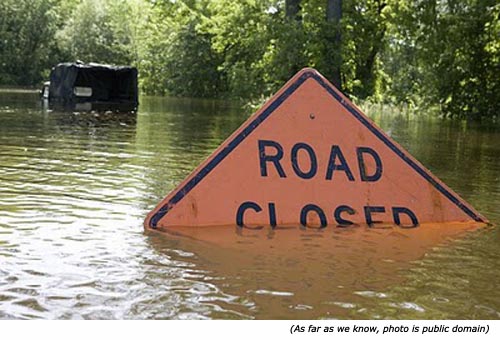
On my way into work several weeks ago, I saw the ominous orange DOT sign stating: "Road Closed Starting April 28". This happens to be on a critical part of my daily commute, and I work in the boonies. I wasn't at all sure what my detour options would be. While it was helpful to get some advance notice that I needed to find an alternate route, there was a critical piece of information missing: How long will the road be closed? One day? One week? One month? The duration of the road closure would make a big difference in the effort I put into finding an alternate option. DOT change management appeared to be lacking much customer focus.

I'd contend that this is the way most IT shops handle incidents, and frequently problems as well. We've matured our incident management so that all issues are logged, categorized, diagnosed, basic repair steps taken, and the incident properly prioritized and dispatched to the appropriate work queue. We may have even started auto-emailing the requesting customer so they have a reference for their request.

These steps are all great. They help us in IT understand the issue and how to prioritize it against the other things on which we work. It helps us restore, as quickly as possible, the customer's ability to work. Ah, there's the rub. "As quickly as possible". ASAP. Sev 1. Blah blah blah.

When I'm experiencing a service interruption, whether it be with cable TV or road construction, the one phrase I hate to hear is "as soon as possible". As in, "We're working to restore your service as soon as possible". As consumers of services, don't we assume all interruptions are resolved as soon as possible? That's the baseline assumption. It doesn't, however, help me plan my alternate commute route. Or whether I should head to the local bar & grill to watch the Twins game. Or whether I should start working on another task instead of waiting for Desktop Support to show up and fix my problem.

Bad news is better than no news. That's the mantra my team hears from me at least weekly. From your customer's perspective, "ASAP" is the equivalent of "when I get around to it". The customer has to know what to expect.  Here are a few tips for setting communication and resolution expectations. Feel free to add your own.

  1. Publish throughout the organization how you determine incident priorities. This doesn't need to be complex. If anything, aim for simplicity. You want it to be read and understood by a lot of people, most of whom don't care about IT processes. Even a little. A starter sample can be found here: ITTicketPrioritization_Sample. This is an example only, and your criteria for determining priority will be different than mine. The point is something simple.

  2. When publishing the determination of priorities, it is also critical to include what the customer can expect. Once again, my sample document shows a simple way to do this. It can become a lot more fancy, just make sure it is easy to understand. Feel free to include other elements of expectations. Some ideas include:

    • Expected response time

    • Expected effort until resolution

    • Expected resolution goal

    • Communication expectations, such as the maximum expected time between updates

  3. Resist all temptation to include expectations that cannot be measured. If you don't have the means to accurately measure time to respond to email, don't include it in your expectations. Saying "our goal is to respond to every email in 30 minutes or less" when you can't measure that, is no better than saying ASAP. It has no meaning.

  4. Use your ticketing system to send out an email to the requester automatically whenever a new incident is logged. The only exception is when the issue is closed at first contact (Then they'll just receive the ticket-closed notification). The email should contain the ticket number and title/short description, the priority of the ticket, and the expected next response and resolution times based on the priority, based on the expectations you already published. You may have different ways to identify expected response and resolution times. The critical part is to set the expectation immediately.

  5. The initial message should include how the requester can have the ticket priority "bumped" if needed. I know its scary to give the user this much power, but this is about communication and transparency. You'll be amazed to see how many tickets don't get bumped via user request. The point is to give the requester control.

  6. As the ticket is worked through "the system", the goal is transparency and engagement. Give the requester every opportunity to see their ticket status and provide input. Our ticket system is pretty limited in its ability to automate status update communication, but it can email an update as requested. I'd like to see an ITSM tool that allowed users to self-select how much updating and what types of updates they want to receive.

  7. Meeting the defined expectations is important. Just as important, however, is updating the requester when the expectations will not be met. This is the "Bad news is better than no news" stage. Do not let automation replace human contact here. This is a whole new paradigm for many support techs; however, they simply MUST make the shift to ensure that user communication is prioritized.

These are just a few ideas. The point is in setting expectations, and finding as many ways as you can to communicate those expectations, especially while a ticket is being worked. After all, when was the last time you praised the efforts of road construction planners? Don't setup your IT team to get the same bad rap.